ATLANTA (GLOBE NEWSWIRE) — Monarch Private Capital (“Monarch”), a national leader in tax credit investing, today announced its strong support for the recently enacted legislation and issuance of program guidelines in New York that bifurcates the state Historic Tax Credit (HTC) from the federal HTC and establishes a transferable state credit structure beginning in tax year January 1, 2026.
Monarch believes this evolution represents a significant, market-driven improvement in how historic rehabilitation projects are monetized and executed.
Historically, New York’s HTC has been “twinned” with the federal historic credit and monetized through the same investor, often resulting in complex deal structures and limited investor participation. Under the updated program structure, the New York HTC is able to be decoupled from the federal HTC and freely transferred beginning in tax year January 1, 2026, fundamentally reshaping the marketplace.
“This is a meaningful step forward for the historic tax credit market,” said Rick Chukas, Partner and Managing Director of Historic Tax Credit Investments at Monarch Private Capital. “By bifurcating the New York credit from the federal HTC and providing free transferability, New York State is creating a more efficient and accessible marketplace. Developers can now optimize pricing across multiple investors, while investors benefit from a simpler, more efficient investment vehicle.”
Under the new structure:
- Federal HTC investors—primarily large banks and institutional funds—can focus exclusively on long-term federal tax equity investments, reducing complexity and improving execution.
- State credit buyers gain access to a short-duration, transferable tax asset, eliminating the need to participate in complex partnership structures.
- Developers benefit from a broader and more competitive investor base, enabling improved pricing, faster monetization, and greater flexibility in structuring transactions.
The introduction of transferability is expected to significantly expand participation beyond traditional tax equity investors, opening the market to:
- Community and regional banks
- Insurance companies
- Corporations with New York tax liability
- Family offices and high-net-worth investors
This expanded investor base mirrors broader trends across the tax credit landscape, where transferability has increased liquidity, improved pricing, and accelerated capital deployment. Monarch has seen this firsthand through its growing leadership in transferable tax credit transactions, including recent Investment Tax Credit (ITC) transfers across a diverse investor base.
“Ultimately, this structure should bring more capital into historic preservation,” Chukas added. “By making the New York HTC easier to access, this should result in more project rehabilitation throughout the state while also strengthening the overall effectiveness of the program.”
Monarch anticipates the new transferability framework will accelerate transaction volume and broaden investor participation across New York historic rehabilitation projects beginning in 2026, and remains committed to partnering with developers, investors, and policymakers to advance innovative financing solutions that deliver both strong financial returns and measurable community impact.
About Monarch Private Capital
Monarch Private Capital manages impact investment funds that strengthen communities by creating energy, affordable housing, and jobs. Its funds provide predictable returns through federal and state tax credits in affordable housing, historic rehabilitation, energy, and film. Headquartered in Atlanta, Monarch maintains offices and professionals across the United States, partnering with institutional and individual investors, developers, and lenders to advance sustainable economic growth.
Division surpasses $835 million in total credits since inception, with significant momentum driven by recent years of expansion in historic rehabilitation and community revitalization nationwide
ATLANTA, (GLOBE NEWSWIRE) — Monarch Private Capital (“Monarch”), a national leader in tax credit investing, today announced a banner year for its Historic Tax Credit (HTC) division, closing 21 projects in 2025 that generated approximately $120 million in tax credits and supported more than $500 million in total development costs. The results reflect not only a record year for the division, but also the continued acceleration of Monarch’s historic platform as investor demand for tax-advantaged, impact-driven strategies continues to grow.
Monarch’s 2025 performance builds on strong momentum established in recent years, as the firm continues to expand its historic tax credit platform across geographies, asset types, and capital partners. The 2025 portfolio includes mixed-use, multifamily residential, and community revitalization projects in markets across the country, demonstrating Monarch’s ability to scale thoughtfully while maintaining disciplined underwriting and execution. As demand for adaptive reuse and historic rehabilitation continues to rise, Monarch is increasingly well positioned to deliver investors access to high-quality transactions with compelling economic and community impact.
Since the division’s inception in 2012, Monarch has closed 208 historic projects, generating approximately $840 million in tax credits and supporting more than $4 billion in total development. Importantly, that long-term track record is being strengthened by accelerating activity in more recent years, reflecting the growing depth of Monarch’s platform, expanding market opportunity, and continued confidence from developers, lenders, and investors. This combination of scale, consistency, and forward momentum positions Monarch as a national leader in historic preservation finance.
“2025 was a milestone year for our historic tax credit business, but more importantly, it reflects the momentum we’ve built across the platform over the last several years,” said Rick Chukas, Partner and Managing Director of Historic Tax Credits at Monarch Private Capital. “We are seeing a broader pipeline, increased transaction volume, and continued investor interest in historic rehabilitation as a strategy that can deliver both predictable tax credit outcomes and meaningful community impact.”
Featured Project Highlights
· Beaver Street – Brooklyn, NY
Located at 81 Beaver Street in Bushwick, Brooklyn, this adaptive reuse of the historic 19th-century William Ulmer Brewery transforms the site into a mixed-use development featuring 34 residential units and ground-floor retail. The project is expected to generate more than $8 million in federal historic tax credits and over $8 million in New York State historic tax credits, demonstrating strong alignment between urban infill redevelopment and tax-advantaged investment opportunities in a high-growth submarket.
· Harrower Village – Glendale, CA
Developed in partnership with the Glendale Housing Authority, Harrower Village is a 40-unit, 100% affordable senior housing community, addressing critical housing demand in Los Angeles County. The project will generate approximately $3.7 million in California state historic tax credits, reflecting the increasing role of state-level incentives in supporting mission-driven housing and preservation outcomes.
· Washington Lofts – Peoria, IL
Located at 800 and 801 SW Washington Street, this adaptive reuse project supports downtown Peoria’s revitalization by converting historic structures into modern residential housing. The development is expected to generate approximately $8.4 million in federal historic tax credits and $10.5 million in Illinois state historic tax credits, underscoring the scale and complexity of transactions that drive economic activity in Midwest markets.
·The Old Home (Louis Sullivan Building) – Newark, OH
Located at 1 North Third Street, this landmark building—originally constructed in 1914 and designed by Louis H. Sullivan, the “father of the skyscraper”—has been meticulously restored and repositioned as a community anchor for Explore Licking County. One of only eight surviving “jewel box” banks, the project combines architectural preservation with long-term civic use. Supported by Monarch Historic Preservation Fund III, the rehabilitation is expected to generate approximately $2.2 million in federal historic tax credits and $1.2 million in Ohio state historic tax credits beginning in 2025, reinforcing both its economic and cultural value.
· Stedman-Fuller Manufacturing Company Complex – Providence, RI
This historic rehabilitation project was recognized as a 2025 Rhody Award winner, underscoring Monarch’s ability to deliver projects that meet the highest standards of preservation excellence, design integrity, and community impact. The recognition provides third-party validation of the quality and execution that define Monarch’s historic investment platform.
Historic tax credits continue to play an increasingly important role in today’s investment landscape, helping bridge financing gaps for complex redevelopment projects while preserving culturally significant assets, addressing housing shortages, and driving economic activity. Monarch’s disciplined underwriting and deep expertise in structuring HTC transactions allow investors to access these opportunities with confidence and consistency. The firm’s approach is further validated by industry recognition, including award-winning projects such as the Stedman-Fuller Manufacturing Company Complex.
Looking ahead, Monarch expects continued growth in 2026, supported by a strong pipeline of opportunities and a market environment increasingly favorable to historic rehabilitation and adaptive reuse. Elevated interest rates and tighter lending conditions continue to create financing gaps that historic tax credits are uniquely positioned to fill, while sustained investor demand for tax-advantaged strategies is driving increased capital allocation to the asset class. At the same time, growing demand for housing, expanded state-level incentive programs, and the increasing focus on adaptive reuse as a cost-effective and sustainable development strategy are further strengthening market fundamentals. With expanding demand from both developers and investors, Monarch believes its historic platform is well positioned to build on recent acceleration while continuing to align investment performance with long-term community and sustainability goals.
About Monarch Private Capital Monarch Private Capital manages impact investment funds that strengthen communities by creating clean power, affordable housing, and jobs. Its funds provide predictable returns through federal and state tax credits in affordable housing, historic rehabilitation, renewable energy, and film. Headquartered in Atlanta, Monarch maintains offices and professionals across the United States, partnering with institutional and individual investors, developers, and lenders to advance sustainable economic growth.
ATLANTA (GLOBE NEWSWIRE) — Monarch Private Capital, a national leader in tax equity impact investing, enters 2026 positioned for its next phase of disciplined growth—scaling proven platforms across energy, affordable housing, historic rehabilitation, and film while continuing to deliver predictable outcomes for investors and measurable benefits for communities nationwide.
Impact at Scale
Since 2005, Monarch has managed tax equity investments generating more than $9 billion in tax credits and supporting more than $23 billion in project development costs. These investments have enabled over 50,000 affordable housing units, more than 7 gigawatts of energy capacity, and $42 billion in economic impact across 42 states and Washington, D.C.
In 2025 alone, Monarch closed investments that will generate approximately $2 billion in tax credits. Across this work, Monarch supported 3,775 affordable housing units, over 1.9 gigawatts of energy capacity, 21 historic rehabilitation projects, and 63 film projects—demonstrating consistent execution at scale.
Positioned for 2026
Building on continued momentum through 2025, Monarch’s focus in 2026 is disciplined execution—expanding access to predictable tax equity investments while maintaining strong risk management across market cycles. As electricity demand grows and housing affordability challenges persist, Monarch’s diversified platform remains well-positioned to support long-term infrastructure and community needs.
Monarch’s leadership also remains actively engaged in national policy discussions with lawmakers and industry stakeholders to help ensure recent legislative developments support market stability and continuity for tax credit programs.
“We’ve built a platform that performs across cycles, sectors, and regulatory environments,” said George L. Strobel II, Partner, Co-Founder, and Co-CEO. “Our focus in 2026 is scaling responsibly—deploying and managing tax equity where it delivers durable returns and lasting impact.”
Strategic Focus Areas
In 2026, Monarch will continue to:
- Expand its energy portfolio across solar, battery storage, fuel cell, equipment manufacturing, renewable fuel production and development, and other qualifying technologies
- Deploy capital efficiently to continue to enable the building of new and preservation of existing affordable housing
- Pursue continued growth in historic rehabilitation that preserves legacy assets and supports community revitalization
- Continue disciplined expansion in domestic film production tax credit placement and financing across key state incentive markets
- Refine its tax equity and structured capital platforms to enhance predictability and efficiency
About Monarch Private Capital
Monarch Private Capital manages impact investment funds that positively impact communities by creating energy, jobs, and homes. The funds provide predictable returns through the generation of federal and state tax credits. The company offers innovative tax credit equity investments for affordable housing, historic rehabilitations, renewable energy, film, and other qualified projects. Monarch Private Capital has long-term relationships with institutional and individual investors, developers, and lenders participating in these federal and state programs. Headquartered in Atlanta, Monarch has offices and professionals located throughout the United States.
October 30, 2025 – ATLANTA (GLOBE NEWSWIRE) — Monarch Private Capital (Monarch), a nationally recognized impact investment firm that develops, finances, and manages a diversified portfolio of projects generating both federal and state tax credits, proudly announces the reopening of the historic Louis Sullivan Building in Newark, Ohio.
Originally built in 1914 and opened in 1915 as The Home Building Association Company—affectionately known as “The Old Home”—this architectural treasure was designed by Louis H. Sullivan, America’s first modern architect and the “father of the skyscraper.” One of only eight of Sullivan’s iconic “jewel box” banks built across the Midwest, the Newark building stands as a testament to his visionary design, blending ornate detail with human-scale proportion.
After more than a century and several iterations as a financial institution, butcher shop, jewelry store, and ice cream parlor, the building has been meticulously restored and reimagined for the next 100 years. The rehabilitation preserves its intricate artistry while transforming it into a vibrant new home for Explore Licking County, serving as a welcome center and gathering place that celebrates both the community’s story and Sullivan’s enduring genius.
As a result of investment by the Monarch Historic Preservation Fund III, the project will generate approximately $2.2 million in 5-Year Federal Historic Tax Credits and $1.2 million in 1-Year Ohio Historic Tax Credits beginning in 2025. Beyond these economic benefits, the restoration strengthens Newark’s architectural heritage and advances local revitalization efforts.
“The impact of Monarch’s investment will continue to be felt in our community long into the future,” said Dan Moder, Executive Director of Explore Licking County. “As the Sullivan Welcome Center, this historic building is a beacon for generations of visitors and residents alike—a place where history, design, and innovation converge.”
“The Licking County Foundation is deeply grateful for the partnership with Monarch,” said Connie Hawk, Strategic Initiatives Director and former President of the Licking County Foundation, who has led the project since its inception in 2014. “These historic tax credits were vital to restoring this architectural masterpiece and returning it to public use for all to enjoy.”
“The Louis Sullivan Building is not just a historic structure—it’s a catalyst for economic growth and a point of pride for the community,” said Rick Chukas, Partner and Managing Director of Historic Tax Credits at Monarch Private Capital. “We’re honored to have played a part in ensuring it continues to inspire for decades to come.”
The Louis Sullivan Building was added to the National Register of Historic Places in 1973 and was generously gifted to the Licking County Foundation in 2013 by Newark native Stephen Jones. Since then, a dedicated team of professionals and volunteers—known as Team Sullivan—has worked to bring the vision to life: restoring the building’s beauty while ensuring its sustainability for generations ahead.
For more information about Monarch Private Capital, visit www.monarchprivate.com.
About Monarch Private Capital
Monarch Private Capital manages impact investment funds that strengthen communities by creating clean power, affordable housing, and jobs. Its funds provide predictable returns through federal and state tax credits in affordable housing, historic rehabilitation, renewable energy, and film. Headquartered in Atlanta, Monarch maintains offices and professionals across the United States, partnering with institutional and individual investors, developers, and lenders to advance sustainable economic growth.
Monarch Private Capital is proud to have contributed to the award-winning preservation of the Stedman & Fuller Manufacturing Company Complex in Providence’s West End. This remarkable project exemplifies our commitment to breathing new life into historic properties while fueling economic growth and strengthening community vitality.
Stedman & Fuller Manufacturing Company Complex (Providence, RI) – Preservation Project Award
Through an impressive adaptive reuse effort, a once-deteriorated industrial site — spanning more than two acres of brownfield lots and an entire city block — has been transformed into a vibrant mixed-use community. Supported by both state and federal historic tax credits, the redevelopment has delivered 64 much-needed residential units to Providence, along with over 20,000 square feet of commercial space now home to local businesses, artist studios, a restaurant, and offices.
This achievement stands as a testament to the power of preservation and smart investment to revitalize neighborhoods and create lasting value. Congratulations to the entire Stedman & Fuller team on this well-deserved recognition!
Read about the award and other 2025 awardees here.
Nick Decicco, Senior Writer, Novogradac
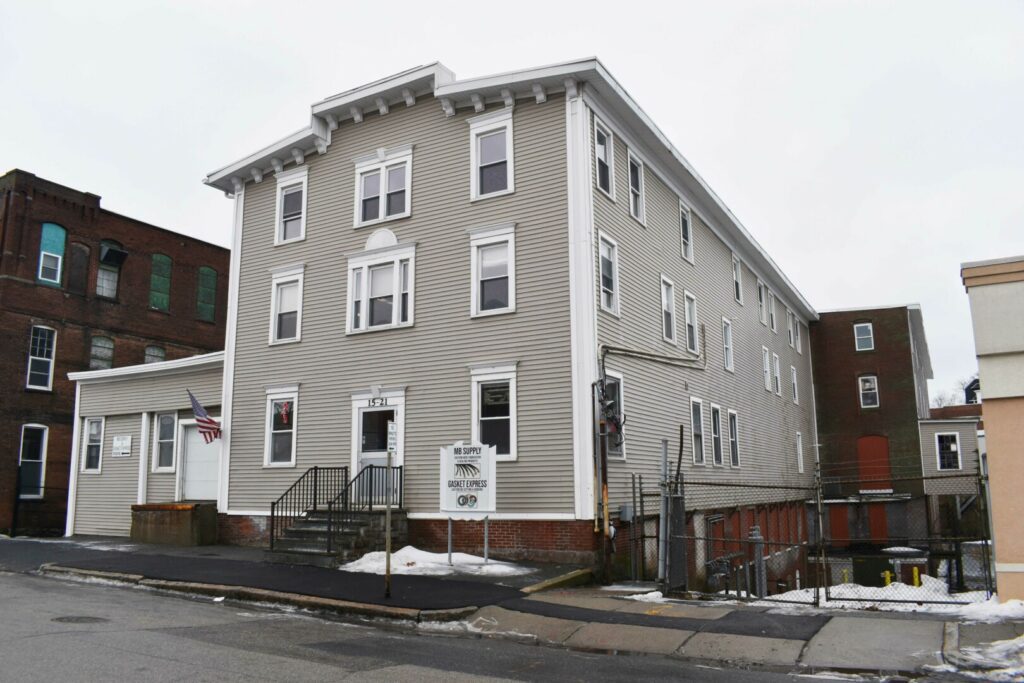
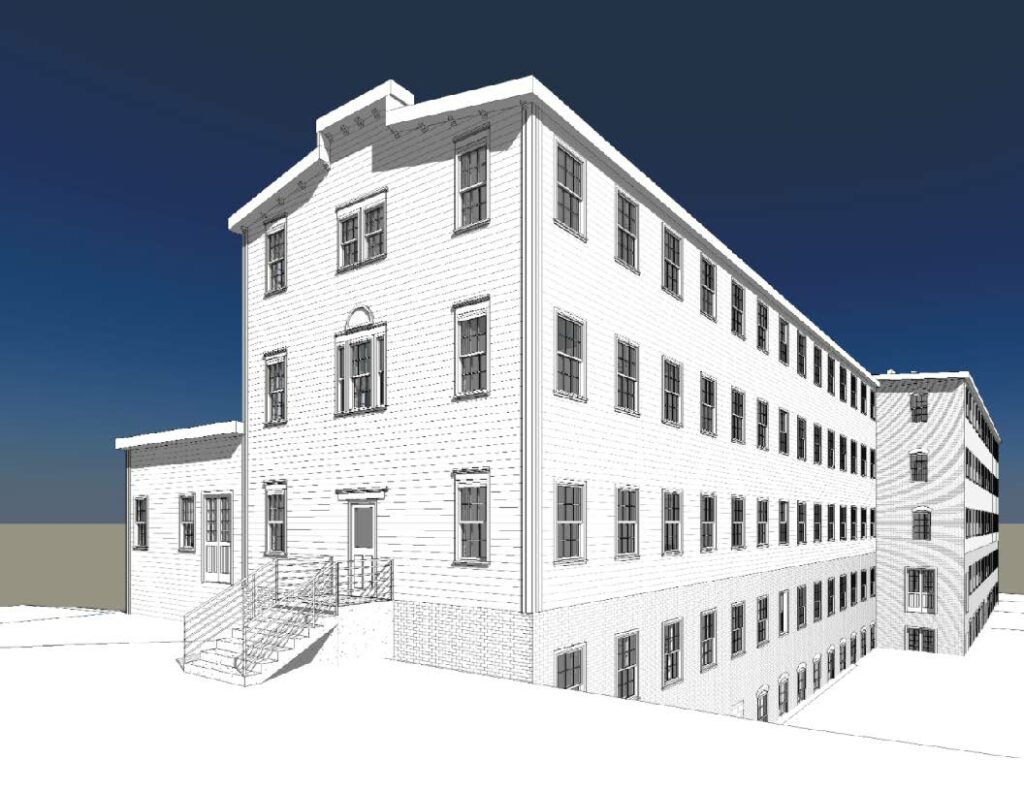
A former organ factor in Worcester, Massachusetts, with history reaching back to the mid-19th century is set for a future as 36 apartments thanks to a combination of state and federal historic tax credits (HTCs).
The site was built in 1865, when John A. Farley and Simeon Taylor joined forces to create the Taylor and Farley Organ Factory, according to the National Register of Historic Places.
A developer and housing manager with strong local ties is behind the redevelopment. Worcester-based GoVenture Capital is leading the redevelopment efforts on the Taylor and Farley Organ Factory. It Follows other GoVenture housing endeavors in Worchester, including the 111-apartment the Kiln and an in-progress, 364-apartment site named The Benjamin.
The redevelopment Taylor and Farley site will include 31 market-rate apartments and five affordable apartments. GoVenutre expects to complete construction in January 2026…
“We’re proud to be part of a project that not only preserves a piece of Worchester’s rich history but also addresses the city’s housing needs in a meaningful way.”
–Rick Chukas, Partner, Managing Director HTC at Monarch Private Capital
Read The entire article in the January 2025 issue of the Novogradac Journal of Tax Credits
ATLANTA, December 5, 2024 (GLOBE NEWSWIRE) – Monarch Private Capital (Monarch), a nationally recognized impact investment firm that develops, finances and manages a diversified portfolio of projects generating both federal and state tax credits, is proud to announce its substantial impact across South Carolina through nearly 100 investments spanning Anderson to Rock Hill and Greenville to Charleston. Utilizing Historic Tax Credits, Mill Tax Credits, Abandoned Building Tax Credits and Low-Income Housing Tax Credits, Monarch has fueled transformative projects that are reshaping communities while preserving cultural heritage and driving economic growth.
These tax equity investments have driven $1.75 billion in development, created more than 20,000 jobs, delivered 3,000 affordable homes, and generated over $5 billion in total economic impact. From revitalizing historic textile mills and landmarks to building much-needed affordable housing communities, Monarch’s projects demonstrate the profound role of tax credits in transforming neighborhoods, supporting local economies, and fostering inclusive growth across South Carolina. These transformative achievements would not have been possible without the critical support provided by tax credit programs, which enable innovative solutions to address pressing community needs.
“South Carolina is brimming with opportunities to create meaningful change through strategic investments in tax credit programs,” said George L. Strobel II, Partner, Co-Founder and Co-CEO at Monarch Private Capital. “By partnering with Monarch, investors can achieve financial benefits while revitalizing communities, preserving historic landmarks, and addressing critical housing needs.”
Monarch invites investors to join in driving economic development, preserving history, and supporting affordable housing solutions across South Carolina.
Transformative Projects Across South Carolina
Sample Mill Projects
- Drayton Mills – Spartanburg: A flagship redevelopment of a historic textile mill into a vibrant mixed-use space for living, working, and dining.
- Cotton Mill Commons – Simpsonville: A revitalization project transforming a historic mill into a hub for community engagement, offering residential, retail, and event spaces.
- Lowenstein Building – Rock Hill: A centerpiece of Rock Hill’s Knowledge Park, blending history with modern innovation.
- Beaumont Mills – Spartanburg: A historic mill repurposed into a dynamic mixed-use space, preserving its heritage while fostering economic and cultural activity.
- Brandon Mill – Greenville: A historic mill tied to Shoeless Joe Jackson, now undergoing preservation and redevelopment.
- Converse Mill – Spartanburg: A historically significant mill showcasing the region’s textile heritage.
- Inman Mill – Spartanburg: A revitalized textile-era mill contributing to Spartanburg’s industrial growth.—
Other Notable Historic Rehabilitation Projects
- Powell Furniture Building (Hotel Trundle): A beautifully restored building in downtown Columbia, now home to a boutique hotel that blends historic charm with modern amenities.
- Kress Building – Columbia: An architectural landmark and cultural icon in downtown Columbia.
- Curtiss-Wright Hangar – Columbia: A historic aviation site repurposed for modern use.
- Smoked Building – Columbia: A stylish redevelopment blending history with contemporary dining and retail.
- Rock Hill Powerhouse – Rock Hill: A cornerstone of Knowledge Park revitalization.
Affordable Housing Projects
Over 30 affordable housing projects reflect Monarch’s commitment to addressing housing needs across South Carolina. Notable examples include:
- Villages at Congaree Pointe – Columbia, 240 units
- Shockley Terrace Apartments – Anderson, 258 units
- Magnolia Terrace – Rock Hill, 156 units
- 573 Meeting Street – Charleston, 70 units
- Gateway at Charleston – Charleston, 69 units
Monarch Private Capital remains dedicated to identifying and investing in opportunities that drive economic development while addressing critical housing and preservation needs. Monarch currently has inventory available, offering a unique opportunity for investors to benefit from tax credit programs while supporting impactful projects. For more information about Monarch Private Capital and its impact investment funds, please contact Jay Sinsley at jsinsley@monarchprivate.com.
About Monarch Private Capital
Monarch Private Capital manages impact investment funds that positively impact communities by creating clean power, jobs and homes. The funds provide predictable returns through the generation of federal and state tax credits. The Company offers innovative tax credit equity investments for affordable housing, historic rehabilitations, renewable energy, film and other qualified projects. Monarch Private Capital has long-term relationships with institutional and individual investors, developers, and lenders participating in these federal and state programs. Headquartered in Atlanta, Monarch has offices and professionals located throughout the United States.
ATLANTA (GLOBE NEWSWIRE) – Monarch Private Capital (Monarch), a nationally recognized impact investment firm, is proud to support South Carolina’s rapid economic growth. According to U.S. Census Bureau data, South Carolina’s population grew by 1.7% from July 2022 to July 2023, making it the fastest-growing state in the nation during that period (U.S. Census Bureau, December 2023).
Much of this growth is the result of incentives—some in the form of tax credits. South Carolina has become a far more attractive home to companies and individuals considering a move. The South Carolina Historic Credit, Mill Credit, and Abandoned Building Credit have rejuvenated downtown areas, communities, and economically depressed areas through the revitalization of historically significant buildings, abandoned mills, and factories. Additionally, the Low Income Housing Tax Credit has incentivized the development of affordable homes and workforce housing, making South Carolina appealing to both companies and individuals.
Monarch is a major investor in these tax credit programs, having invested in 92 projects throughout South Carolina, and is thrilled to see the profound effects these projects are having on the state’s communities.
If you would like to participate in this economic transformation and acquire South Carolina tax credits to reduce your tax liability, please contact Jay Sinsley at Monarch Private Capital at jsinsley@monarchprivate.com.
About Monarch Private Capital
Monarch Private Capital manages impact investment funds that positively impact communities by creating clean power, jobs and homes. The funds provide predictable returns through the generation of federal and state tax credits. The Company offers innovative tax credit equity investments for affordable housing, historic rehabilitations, renewable energy, film and other qualified projects. Monarch Private Capital has long-term relationships with institutional and individual investors, developers, and lenders participating in these federal and state programs. Headquartered in Atlanta, Monarch has offices and professionals located throughout the United States.
$13.5 Million Project to Transform Former Organ Factory into 36 Residential Units, Including Market-Rate and Affordable Housing
ATLANTA (GLOBE NEWSWIRE) – Monarch Private Capital (Monarch), a nationally recognized impact investment firm that develops, finances and manages a diversified portfolio of projects generating both federal and state tax credits, is pleased to announce the closing of tax equity financing for the rehabilitation of a historic building in Worcester, Massachusetts. This $13.5 million project, led by GoVenture Capital Group, LLC, will transform the historic property into 36 residential units, offering 31 market-rate apartments and 5 affordable units to meet the diverse housing needs of the community.
The building sits on the former site of the Taylor and Farley Organ Company, a notable Worcester manufacturer that operated from 1855 to 1885, producing reed organs that were highly regarded during the 19th century. The redevelopment of this historic site honors the city’s rich industrial past while providing modern housing solutions for today’s residents.
“We’re thankful to be part of the Taylor Farley project. Converting the building’s use not only breathes new life into the property but also provides desperately needed housing in an area that needs it the most,” said Brendan Gove, President of GoVenture Capital.
The financing includes both state and federal Historic Tax Credits (HTCs), reinforcing Monarch’s commitment to supporting community revitalization through the preservation of historic landmarks. The development is set to be completed by January 31, 2026.
The project will breathe new life into one of Worcester’s notable historic structures, retaining its architectural significance while adapting the building to modern residential standards. In addition to market-rate housing, the project will include five affordable units designed to accommodate residents earning a percentage of the Area Median Income (AMI), enhancing the accessibility of quality housing in the area.
“We’re proud to be part of a project that not only preserves a piece of Worcester’s rich history but also addresses the city’s housing needs in a meaningful way,” said Rick Chukas, Partner and Managing Director of Historic Tax Credits at Monarch Private Capital. “This development perfectly aligns with our mission to support community growth through historic preservation and affordable housing, and we look forward to its positive impact on the Worcester community.”
Monarch Private Capital’s involvement in this project highlights its dedication to community development, historic preservation and affordable housing. By blending modern living with historical charm, the Worcester project contributes to the city’s ongoing growth and revitalization.
For more information about Monarch Private Capital and its impact investment funds, please email Rick Chukas at rchukas@monarchprivate.com.
About Monarch Private Capital
Monarch Private Capital manages impact investment funds that positively impact communities by creating clean power, jobs and homes. The funds provide predictable returns through the generation of federal and state tax credits. The Company offers innovative tax credit equity investments for affordable housing, historic rehabilitations, renewable energy, film and other qualified projects. Monarch Private Capital has long-term relationships with institutional and individual investors, developers, and lenders participating in these federal and state programs. Headquartered in Atlanta, Monarch has offices and professionals located throughout the United States.
About GoVenture Capital Group
Based out of Worcester, MA, GoVenture acquires, develops, and manages residential and commercial properties that contribute to the vitality and growth of our local communities. GoVenture’s philosophy is focused on maintaining a creative and flexible approach to all opportunities, while formulating a plan that generates the greatest value for all stakeholders.
GoVenture targets gateway markets and select urban and suburban markets that have key indicators showing liquidity, population growth, economic diversity, and other positive demand trends. Founded in 2018 and built on a foundation of discipline, innovation, sustainability, and integrity, we seek partners that embody the same values.